
Daylight is a key determinant of visual comfort in buildings (Bian et al., 2021), and numerous international standards and guidelines therefore define acceptable practice for daylight provision and control (Mangkuto et al., 2016). In indoor environments, user responses are shaped not only by average illuminance but also by the spatial and temporal distribution of light: direct sun penetration, high luminance ratios within the field of view, and reflections from glossy surfaces can create discomfort glare and visual distraction. These effects interact with exposure duration, window placement, surface reflectance, and the angle of incoming solar radiation, and they can influence mood and perceived performance (Leslie, 2003). For designers and facility managers, daylight-related heat gains and glare are often linked in practice, because unshaded sun patches may simultaneously increase cooling loads and degrade visual comfort (Al-Obaidi et al., 2017).
Sunlight has far-reaching effects on wellbeing, comfort, and environmental outcomes (Kittler, 2007). When daylight is thoughtfully managed, it can reduce dependence on electric lighting and contribute to healthier and more satisfying indoor experiences; when it is unmanaged, it can produce discomfort and drive avoidable energy use (Leslie, 2003). Accordingly, architects and engineers increasingly seek to understand how lighting conditions relate to occupant behavior in real settings (Heydarian et al., 2016). Beyond physical and behavioral impacts, research has also emphasized the role of affect and emotional appraisal in perceived spatial quality (Andersen, 2015). Window access and views, for example, are often associated with more positive experience, yet these benefits may be offset when glare or strong contrasts reduce usability.
Educational buildings are fundamentally intended to support learning (Elseragy et al., 2009). Their design must maintain a comfortable learning atmosphere and deliver adequate, well-distributed illumination (Yener, 2002). Window-to-wall ratio and façade configuration influence both daylight availability and indoor thermal conditions, and their effects may be beneficial or adverse depending on context and control strategies (Alibaba, 2016). Different window configurations and shading systems can therefore alter educational environments in multiple ways (AbuGrain and Alibaba, 2017). Within university campuses, libraries remain central to students’ learning, reflection, and information processing, even as they also function as social and collaborative hubs (Sternheim, 2016). In these spaces, light affects productivity and a range of visual and non-visual outcomes—including mood and alertness—and interior design choices such as furniture location and finish properties shape how users occupy the environment (Bellia et al., 2013; Choy and Goh, 2016). Because environmental variables can either enhance or hinder students’ learning (Elseragy et al., 2009), the influence of the physical interior setting warrants careful, context-sensitive study (Sufar et al., 2012).
This study examines daylight conditions in a university library with a focus on visually driven comfort outcomes and associated behavioral adaptation. Specifically, it investigates (1) how students perceive daylight quality and glare in distinct study zones during daytime study hours (10 a.m. to 5 p.m.), and (2) how these perceptions and behaviors align with simulation-based estimates of solar radiation and solar heat gain as indicators of potential direct sun exposure. Each study area was observed and coded individually, and reported user responses were interpreted alongside building attributes and model outputs to provide a triangulated account of daylight-related comfort and study behavior in EMU’s main library. The goal is not to generalize universally from a single building, but to produce an empirically grounded diagnosis of where and when daylight conditions support, or hinder, sustained study and how design and operational measures can improve performance in comparable library settings.
Artificial lighting can provide adequate brightness, yet it may also produce undesirable psychological and physiological outcomes for occupants when spectral content, glare control, or temporal patterns are poorly matched to user needs (Amundadottir, Rockcastle and Andersen, 2017). In architectural practice, daylight is frequently employed for its aesthetic value and its potential to reduce energy demand, but it also introduces risks associated with variability: direct sun patches, sharp shadows, and high luminance contrasts can compromise visual comfort. Human circadian rhythms are closely tied to environmental cues—particularly daily daylight cycles (Sahin et al., 2014)—and because daylight influences the circadian system, it can shape behavior, productivity, and emotional state (Elseragy et al., 2009). Much of the literature therefore examines daylight availability through variables linked to luminance distribution and window geometry (Moscoso et al., 2015; Wang and Boubekri, 2011).
People depend on daylight to support both physical wellbeing and psychological balance. When daylight is optimized, it can enhance productivity, health, and perceived comfort; conversely, insufficient or poorly controlled daylight can lead to dissatisfaction and coping behaviors such as avoidance of particular seats or increased reliance on electric lighting. Light is especially decisive because it shapes perception and action; changes in brightness, daylight access, and window views can alter occupant responses in multiple ways (Veitch, 2001).
Daylight contributes to the regulation of physiological and biochemical processes, and prolonged insufficiency may be associated with depression, sleep disruption, exhaustion, and increased tendencies toward inactivity (Edwards and Torcellini, 2002). Sunlight exposure further supports vitamin D synthesis, which offers multiple health benefits (Wurtman, 1975).
Daylight is frequently regarded as supportive for students’ health, behavior, and performance, and its full spectrum and dynamic qualities may positively affect wellbeing and productivity (Cheung and Chung, 2008; Galasiu and Veitch, 2006; Inan, 2013). At the same time, research has highlighted limitations in parts of the evidence base—such as inconsistent control of daylight conditions across test areas and incomplete treatment of spectral differences between artificial lighting and daylight (Heschong et al., 2002). In library contexts, daylighting strategies are particularly relevant because they may encourage students to use these environments beyond exam-focused study periods (Othman and Mazli, 2012). Nevertheless, daylight becomes an advantage only when it is applied correctly; discomfort glare and reflections can be reduced through external or internal shading devices, though such measures also influence daylight availability and energy use. Common contributors to ineffective daylighting that can undermine productivity include elevated indoor temperatures, excessive localized illumination, and severe glare (Edwards and Torcellini, 2002).
On university campuses, libraries are primary settings for concentrated study. Appropriate lighting is therefore essential for effective study performance, and failing to integrate daylight considerations during design and operation can increase operating costs due to heavier reliance on artificial lighting. Using daylight can reduce energy consumption and help alleviate cooling demands in buildings (Astrich et al., 2009), but only if glare and contrast are controlled.
Daylight levels and luminance distribution determine whether a library feels inviting or uncomfortable, thereby affecting psychological responses and behavior. Yet research on daylight use in library interiors—especially within university libraries—remains relatively limited (Kilic and Hasirci, 2011). Achieving a well-balanced daylighting solution depends on interacting factors, including site and building orientation, window size and direction, control strategies, and maintenance (Selkowitz, 1998). Many daylighting technologies aim to improve overall quality by addressing uneven distribution, delivering light deeper into interiors, and reducing direct glare; functionally, they can be grouped into solar control elements and transmission/distribution systems that rely on reflection and refraction (Baker et al., 1993).
From a visual-comfort standpoint, glare is commonly understood as either discomfort glare (subjective annoyance or pain) or disability glare (reduced visual performance due to veiling luminance). In daylit interiors, glare risk is driven by luminance distribution in the field of view and by specular reflections from desks, floors, or device screens. Because these conditions vary over the day and across seats, occupants often adapt through micro-behaviors—changing posture, rotating screens, drawing blinds, or relocating—which can be observed even when overall illuminance levels appear adequate. Field studies that combine structured observation with user reporting are therefore useful for identifying where and when daylight supports study and where it creates avoidable discomfort. However, many post-occupancy evaluations report daylight satisfaction at a building level without resolving micro-scale differences between distinct study zones, orientations, and surface conditions. Linking these spatial differences to concrete behavioral responses is particularly relevant in libraries where prolonged near-task visual work is common.
This study focuses on Ozay Oral Library, the main library of Eastern Mediterranean University (EMU). The building was selected because its study areas are heavily used by students. Understanding how daylight affects students’ psychological responses and coping behaviors can help identify practical design and operational measures to improve comfort and support sustained learning in comparable library settings.
The researchers adopted a layered research design to examine how daylight influences EMU’s main library. Using a case-study approach, they integrated qualitative and quantitative techniques to capture both the physical light environment and users’ situated responses. For the qualitative component, the library was evaluated through a structured observation survey that documented each coded study area (Tables 1–4) and recorded recurring conditions linked to daylight access, glare potential, and user coping behaviors; representative conditions are illustrated in Figures 1–3. For the quantitative component, a schematic building model was developed and simulations were performed in Autodesk Ecotect Analysis (v2.35) (https://knowledge.autodesk.com/support/ecotect-analysis) to estimate relative solar radiation and solar heat gain in the indoor study zones. These model outputs were used as comparative indicators of potential direct sun exposure across orientations and times of day, complementing (rather than replacing) the observation and questionnaire evidence. Alongside these steps, the literature review approached library daylighting from two complementary perspectives—psychological and architectural—to support interpretation of the empirical findings.
| Item | Description |
|---|---|
| Case-study building | EMU Main Library (Ozay Oral Library) |
| Location | Famagusta, North Cyprus |
| Coordinates | 35.141386\(^\circ\)N, 33.911950\(^\circ\)E |
| Building orientation | Approximately 55\(^\circ\) south, 35\(^\circ\) east (from site description) |
| Climate characteristics | Hot-humid Mediterranean; summer >32\(^\circ\)C, winter 6\(^\circ\)C |
| Study period | October–December 2016 (fall semester) |
| Observation window | 10:00–17:00 (daylight hours) |
| Primary users studied | Students using indoor study areas |
| Methods combined | Observation survey + questionnaire + Ecotect simulation (solar gain/radiation) |
| Sample size (questionnaire) | \(\approx\)100 respondents (undergraduate and postgraduate students) |
| Area ID | Floor | Space type | Seats (approx.) | Brief description / location notes |
|---|---|---|---|---|
| SA-01 | Ground | Open study area | 35 | Primary study zone near main entrance, high traffic |
| SA-02 | Floor 1 | Study room | 8 | Enclosed room (quiet zone) adjacent to eastern book stacks |
| SA-03 | Floor 1 | Open area | 15 | Open seating between central bookshelves, diffused light |
| SA-04 | Floor 2 | Open area | 20 | Reading tables near south-east façade windows |
| SA-05 | Floor 2 | Study room | 6 | Enclosed group study room, controlled access, west wall |
| SA-06 | Floor 3 | Open area | 12 | Individual carrels along north-facing corridor wall |
| SA-07 | Floor 3 | Quiet corner | 4 | Individual seating in corner near large east window wall |
| Area ID | Window orientation | WWR (%) | Glazing type | Shading device | View quality | Notes on reflections / interior finishes |
|---|---|---|---|---|---|---|
| SA-01 | South-East | 40 | Clear, single-pane | Overhang + interior blinds | Good (campus view) | High reflectance white ceiling; glossy desk surfaces cause screen glare |
| SA-02 | East | 25 | Tinted | Interior vertical blinds | Limited (adjacent building) | Medium reflectance walls; low glare risk due to small window |
| SA-03 | North (internal) | 10 | Clear | None | Poor (internal corridor) | Low reflectance dark bookshelves absorb light; minimal daylight |
| SA-04 | South-East | 60 | Clear, single-pane | None | Excellent (landscape) | Direct sun penetration causes strong shadows and potential glare on tables |
| SA-05 | West | 20 | Tinted | Exterior louvers | Moderate (campus square) | Medium reflectance finishes; secondary light from glazed partition |
| SA-06 | North | 30 | Clear | None | Fair (courtyard) | Consistent diffuse light; low contrast, minimal glare risk |
| SA-07 | East | 70 | Clear, single-pane | Interior roller shade | Excellent (distant sea view) | High glare risk in mornings; user-operated shade frequently deployed |
| Area ID | Glare level | Peak glare time(s) | Typical user response | Solar gain (W/m²) | Notes (daylight distribution / comfort remarks) |
|---|---|---|---|---|---|
| SA-01 | Moderate | 12:00–14:00 | Screen rotation, seat shift, blinds adjusted | 145 | 65% of questionnaire respondents noted occasional glare discomfort. |
| SA-02 | Low | 08:00–10:00 (pre-obs.) | Minor seat adjustment | 85 | Low occupancy; users reported “adequate” light. |
| SA-03 | Very Low | N/A | No observable reaction | 35 | Reliant on artificial light; perceived as “dim” but “comfortable for focus”. |
| SA-04 | High | 10:00–12:00 | Avoidance, use of alternate areas, shading eyes | 210 | High solar gain correlates with 80% negative comfort votes during peak hours. |
| SA-05 | Low-Moderate | 15:00–17:00 | Blinds partially closed | 95 | Group use; lighting negotiated among occupants. |
| SA-06 | Low | N/A | No observable reaction | 50 | Uniform light; highest rating for “visual comfort” in questionnaire. |
| SA-07 | Severe | 08:00–11:00 | Consistent use of roller shade, seat abandonment | 185 | Shade deployment observed in 90% of visits before 11:00. |
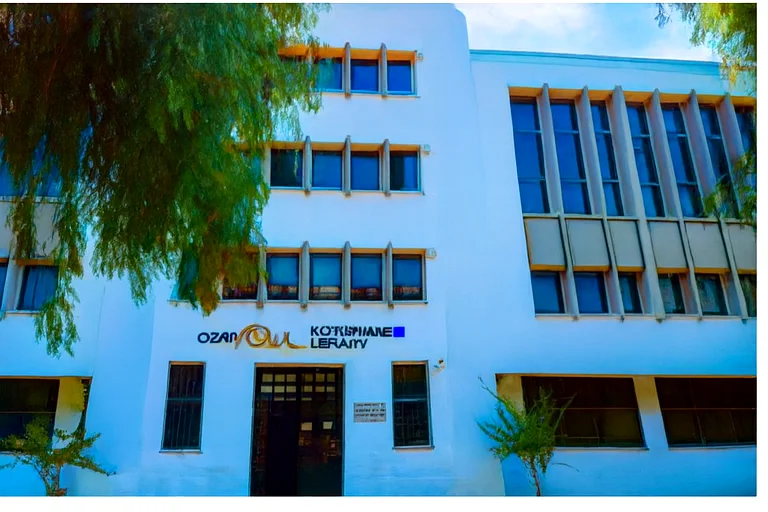
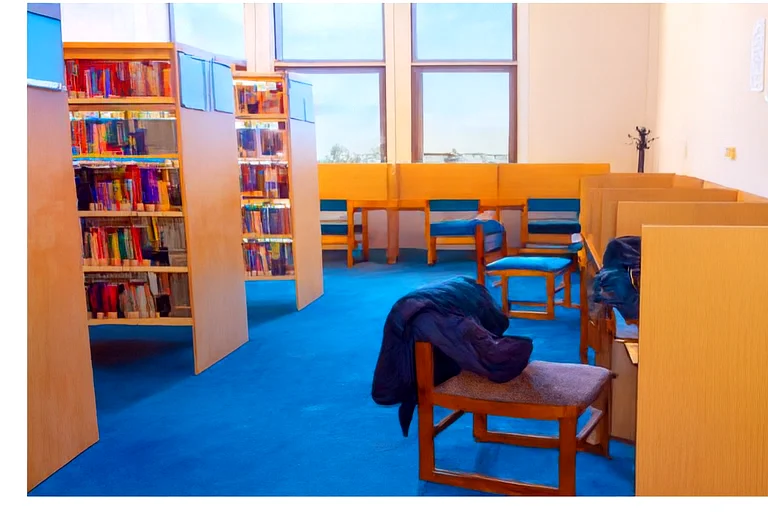
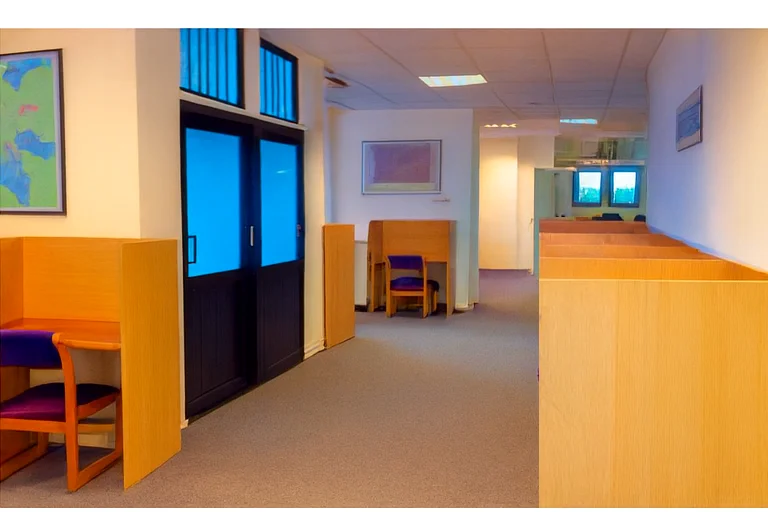
The library is situated on the EMU campus in Famagusta, North Cyprus (35.141386\(^{\circ}\)N, 33.911950\(^{\circ}\)E), with the building oriented approximately 55\(^{\circ}\) south and 35\(^{\circ}\) east. The city is characterized by a hot, humid climate: summer temperatures can exceed 90\(^{\circ}\)F (32\(^{\circ}\)C), while winter lows can fall below 43\(^{\circ}\)F (6\(^{\circ}\)C). During autumn, temperatures decline to average highs near 82\(^{\circ}\)F (28\(^{\circ}\)C) and lows around 59\(^{\circ}\)F (15\(^{\circ}\)C) (Climatemps.com, n.d.). EMU’s main library comprises four floors with multiple study settings; in this paper, analysis is conducted at the level of the coded study zones described in Tables 2–3 (open seating areas and enclosed study rooms located near façades and between book stacks). The exterior façades and interior study spaces are depicted in Figures 1–3. Data collection spanned October, November, and December of the fall 2016 semester, and observations and questionnaires were conducted between 10 a.m. and 5 p.m. to capture typical daytime study conditions.
Data collection relied on a two-section questionnaire administered to library users during these hours. Section (A) used structured response options to identify lighting preferences and perceived daylight quality (including glare sensitivity) across time periods, while Section (B) used open-ended questions to elicit personal impressions and emotional responses. Questionnaire results were summarized descriptively and interpreted together with observation notes. Paper surveys were distributed to roughly 100 students (undergraduate and postgraduate), selected using a one-fifth sampling rule based on the total number of users present in the study areas between 10 a.m. and 5 p.m. across different days. Completed questionnaires were retrieved by the authors on the same day they were issued.
Observational work was carried out on the same days as the questionnaire administration. The authors documented each study zone through written notes and photographs, with attention to direct sun penetration, reflections on work surfaces and screens, the availability and use of shading devices, and observable coping behaviors (e.g., seat relocation or screen repositioning). In some cases, brief follow-up oral prompts were used to clarify responses and contextualize observed behaviors.
The results indicate that students’ responses in the library were shaped by several indoor environmental variables, with daylight-related glare and luminance non-uniformity emerging as particularly influential. Direct sun penetration and reflections created localized zones of discomfort even when other areas appeared adequately lit. Overall, a larger share of respondents reported preferring natural lighting while studying (65%) than relying on artificial lighting (45%). These percentages are not mutually exclusive, as many users described electric lighting as a supplement to daylight when daylight was insufficient or uncomfortable.
Across the coded study areas, daylight access between 10 a.m. and 5 p.m. was most strongly associated with roof apertures (about 581 ft\(^{2}\)/54 m\(^{2}\)) and desks located near tall vertical windows. Approximately 56% of users across all floors reported receiving meaningful daylight during these hours. However, observations and comments emphasized uneven distribution: some seats benefited from diffuse or reflected daylight, while other seats experienced high contrast, sun patches, or veiling reflections on work surfaces and screens. As summarized in Table 4, these conditions were accompanied by recurring coping behaviors such as seat relocation and blind use where available.
For example, in the northwest façade zones, first-floor tables located nearer the center of the room were reported as more comfortable in the morning because they avoided direct sun exposure, while nearby seats closer to the openings experienced disturbing glare. In comparable northwest locations on the second floor, respondents reported stronger glare and greater disruption, and observations recorded more frequent seat changes and avoidance of the brightest positions.
Survey responses indicated pronounced time-of-day sensitivity. During 10 a.m.–12 p.m., 78% of respondents reported that daylight influenced their study experience, and many described the environment as energizing when seated away from direct sun paths. In the southeastern zones, this pattern coincided with relatively high modeled solar heat gain (about 17,000 W), yet respondents rarely framed discomfort in thermal terms, suggesting that visual conditions were the dominant driver of satisfaction under mechanically conditioned indoor temperatures.
During early afternoon (1–4 p.m.), the same zones more often produced negative responses. Users described fatigue and reduced focus when darker background regions coincided with bright sun patches and specular desk reflections; in this period, model outputs reached roughly 19,000 W in the most exposed zones, consistent with a higher likelihood of direct sun penetration. By late afternoon (4–5 p.m.), respondents commonly preferred moderate daylight levels, and about 72% indicated that both excessive contrast and insufficient ambient illumination could reduce comfort and concentration.
Taken together, the qualitative and simulation evidence supports a coherent interpretation: students value daylight in library study areas, but comfort and seat selection depend primarily on the controllability and visual quality of daylight (uniformity, glare, and reflections). The Ecotect results are best interpreted as comparative indicators of solar exposure rather than as a direct glare metric; nevertheless, when read alongside observed sun patches and user reports, they help identify locations and times of elevated risk and guide targeted operational measures such as relocating workstations away from direct sun paths, reducing specular finishes on desks, and ensuring accessible, user-adjustable shading in high-risk orientations.
The findings show that daylight in EMU’s main library shapes students’ comfort and study behavior, with glare, reflections, and uneven luminance distribution being the primary sources of dissatisfaction. While most users valued daylight, its benefits depended on effective control and balanced illumination: morning conditions dominated by indirect daylight were more often associated with improved concentration, whereas early-afternoon and late-day conditions with strong contrasts or direct sun patches were linked to fatigue, discomfort, and reduced focus. Simulation-based estimates of solar radiation and solar heat gain helped contextualize where direct sun exposure was most likely to occur; however, reported seat selection and coping behaviors aligned more consistently with perceived visual quality than with heat gain alone. Within the limits of a single-building case study and descriptive analysis, the results suggest practical measures for comparable libraries: optimize furniture placement to avoid glare paths, reduce specular interior finishes, and provide adaptable, user-accessible shading and glazing strategies to enhance visual comfort and support sustained learning.